
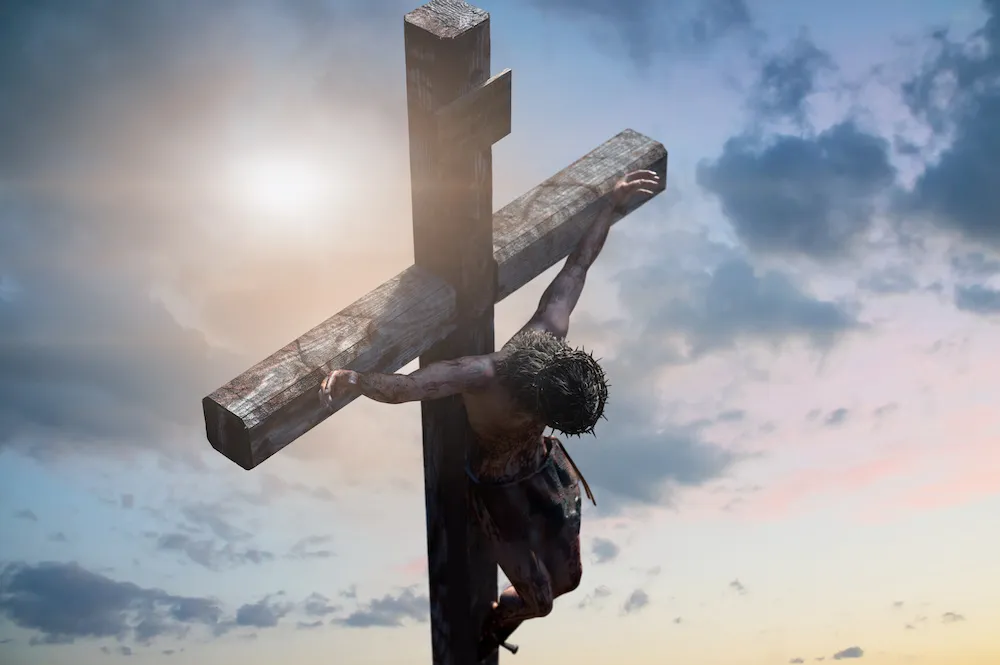
Solid caseJesus ChristHis resurrection represents the deepest point of difference between Islam and Christianity. But apart from religious faith, what does he say?Historical research?
Here we will present the issue from an academic historical angle as much as possible.
First: Did the crucifixion happen historically?
Most historians—even non-Christians—consider the crucifixion of Jesus an almost certain historical event.
1) Early Christian sources
The oldest testimonies are in Paul’s letters (around 50 AD), only about 20 years after the event. Paul clearly refers to Christ’s death, crucifixion, and resurrection. Also, the four Gospels inNew TestamentThe crucifixion incident is remembered in many details.
2) Non-Christian sources
Roman historianTacitus: It is stated that “the Messiah” was executed during the reign of Pontius Pilate during the rule of Tiberius.
Jewish historianJosephus: Referred to the crucifixion of Jesus (although there is discussion of some later textual additions).
The presence of these extra-biblical references reinforces the view that the crucifixion was known historically.
📌Historical summary:
In contemporary academic research, the crucifixion of Jesus is considered one of the most historically proven events of his life.
Second: What about the resurrection?
Resurrection is different from crucifixion; Because it is a supernatural event, and therefore difficult to prove in the usual historical way. But historians are studyingThe facts surrounding it.
1) Very early belief in the resurrection
The oldest formula for belief in the resurrection is found in Paul’s first letter to the Corinthians (chapter 15), and researchers believe it dates back to a few years after the crucifixion. This means that belief in the resurrection did not develop centuries later, but rather appeared very early.
2) The empty grave
The Gospels mention that the tomb was found empty. Some scholars argue that mentioning women as witnesses (in a society where women’s testimony was not legally powerful) enhances the possibility of the novel’s authenticity.
3) The transformation of the disciples
The disciples were fearful after the crucifixion, but then they became bold proclaimers, willing to die for their faith.
The historical question posed: What brought about this radical transformation?
Third: The proposed explanations
Researchers suggest several explanations:
- The resurrection actually happened.
- Group spiritual visions or experiences.
- Moving or losing the body.
- A later mythological development (an opinion weakened by the antiquity of the texts).
There is no scientific consensus on the interpretation, but there is almost consensus that:
- Jesus was crucified.
- His followers sincerely believed that he rose from the dead.
Fourth: The Islamic vision
In Islam, it is believed that:
- Christ was not really crucified.
- He was raised to heaven.
- He will return at the end of time.
This is based on Quranic texts that are traditionally understood in this way.
Fifth: The deep question
History can be taught:
- Texts
- Certificates
- Evolution of faith
But the question of resurrection in the end goes beyond academic research to a personal question:
Could God intervene in history in this way?
If Christ did rise, what would that mean for humanity?
Balanced extract
| The point | General academic opinion |
|---|---|
| Steel | A historical event with strong evidence |
| The disciples’ belief in the resurrection | Historically consistent |
| Interpretation of the Resurrection | Discussed |