
First: What do we agree on?
1. Birth from a virgin
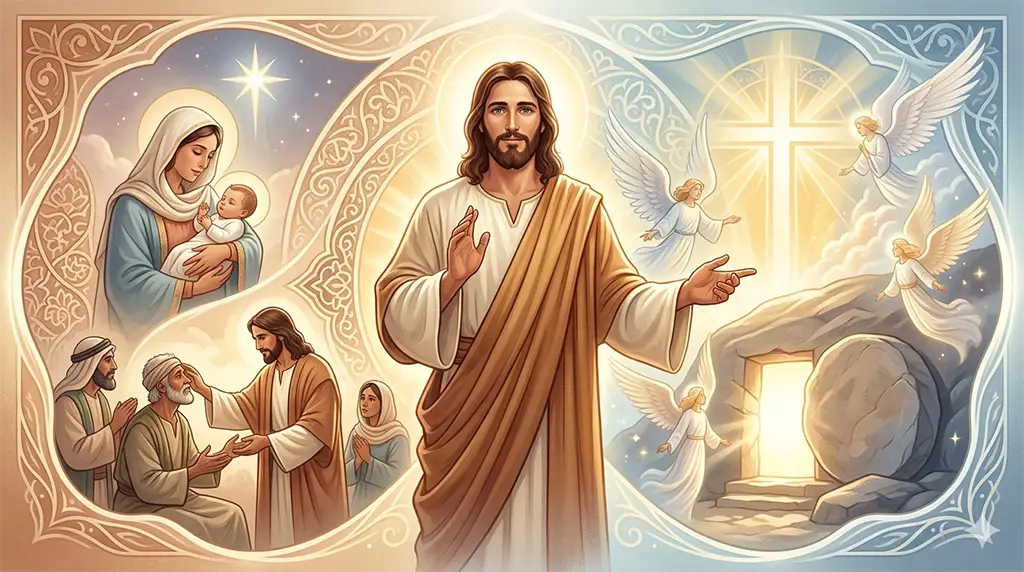
Muslims and Christians believe that Jesus was born from the Virgin Mary by a divine miracle. The Qur’an clearly states that Mary was not touched by human beings, and that God created Jesus by His word. This event demonstrates God’s transcendent power and gives Jesus a special status from his birth.
2. Jesus Christ (the Messiah)
The Qur’an describes Jesus as “the Messiah,” a title with great significance. Although the interpretation of the meaning of “Messiah” differs between Islam and Christianity, agreement on this title reflects Jesus’ unique position and his distinct role in God’s plan.
3. Miracles
Both sides believe that Jesus performed great miracles, God willing, such as healing the sick, reviving the dead, and opening the eyes of the blind. These actions show the power of God working through him, and indicate that he is not just an ordinary prophet.
4. A life of purity and righteousness
Everyone agrees that Jesus lived a sinless life and was an example of love, mercy, and purity. This highly moral biography makes his teachings deeply influential even today.
Second: Where do we differ?
Despite this broad agreement, there are fundamental differences in understanding Jesus’ identity and role.
1. The nature of Jesus: a prophet or more?
In Islam, Jesus is considered a great prophet, but he remains a created human being.
In the Christian faith, Jesus is seen as more than a prophet—he is the Word of God who became incarnate, that is, God revealed himself in a unique way in his person.
This difference is not just a detail, but rather a fundamental focus in understanding Jesus’ message and identity.
2. Crucifixion and resurrection
The Qur’an indicates that Jesus was not crucified, but rather raised to God.
While Christians believe that Jesus was crucified, died, and then rose from the dead. They see this event as the heart of the Christian message, where the cross is understood as an act of love and redemption, and the resurrection as evidence of victory over death.
3. The meaning of salvation
In Islam, salvation is linked to faith in God, good deeds, and God’s mercy.
In Christianity, Jesus is seen as the mediator of salvation, and his death and resurrection open the way to forgiveness of sins and a new relationship with God.
An invitation to contemplate
Despite the differences, having this much agreement about the character of Jesus opens an important door for reflection:
Who is Jesus really? Why does it occupy this unique place in both the Qur’an and the Bible?
Meditation on his life, teachings, and miracles may lead to a deeper understanding of his person and God’s message to humanity. Honest dialogue does not aim at arguing, but rather at searching for the truth with love and respect.
a summary
Jesus is an important meeting point between Muslims and Christians. We agree on his wondrous birth, his miracles, his purity, and his title as the Messiah. We disagree about his nature, death, and resurrection. But these differences can be an opportunity for honest dialogue and deep reflection, not a cause for division.
In the end, the question remains open to everyone:
Who is Jesus to you?