
An introduction for the Muslim reader
In the Islamic faith, it is clear: God alone forgives sins. God Almighty said:“Who forgives sins except God”. Forgiveness is not just a word, but rather pure divine authority. The Prophet calls for repentance, but he does not say to anyone: “I forgive you.” But when we open the Gospel, we find a scene that poses a profound and embarrassing question at the same time:Jesus himself forgives sins.So who is he?
The story that confused everyone
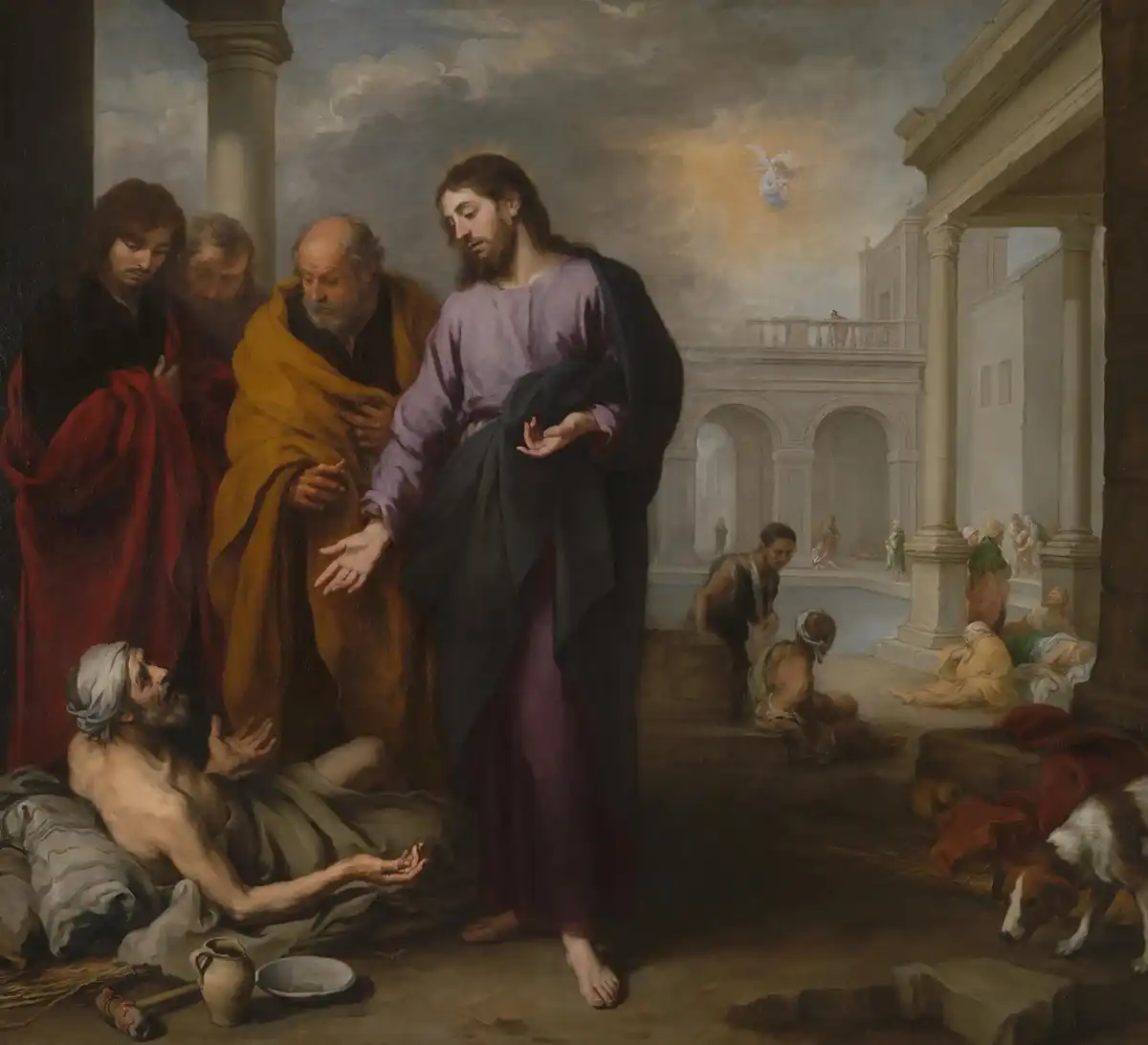
The Gospel of Mark (Chapter 2) tells of friends carrying a paralytic to Jesus. Due to the intense crowding, they opened the roof of the house and lowered it in front of it. Everyone was waiting for a word of healing. But Jesus said something completely different:
“My son, your sins are forgiven.”
Here the clash happened. Some of the scribes said in their hearts:
“Why does this man speak such blasphemies? Who can forgive sins but God alone?”
Note that their objection was not to healing, but toForgiveness.
Because sin, in the Jewish as well as Islamic sense, is a violation of God’s right. How can a person forgive her?
Why didn’t he say: “May God forgive you”?
This is a fundamental question. If Jesus were only a prophet, it would be natural for him to say:
- “May God forgive you”
- Or “Repent and God will forgive you.”
But he did not attribute forgiveness to God in the form of supplication, but rather declared forgiveness in the form of authority:
“Your sins are forgiven you.”
Then he continued, challenging their ideas:
“But that you may know that the Son of Man has authority on earth to forgive sins…”
Then the paralytic was healed in front of them. It is as if he is saying: Healing is a visible sign of an invisible authority.
What does this mean theologically?
In the Christian faith, forgiveness is not an administrative decision issued from heaven, but an act of salvation linked to the person of Jesus himself. Because sin – according to the Christian faith – is not just breaking a law, but breaking a relationship with God.
If Jesus forgives, this means one of two things:
- Either he dares to stand before God (and this is what his opponents accused him of)
- Or that he has divine authority in himself
It is precisely for this reason that he was later accused of blasphemy.
The difference between the Prophet and the Forgiver
Prophets in the Bible — as well as in the Qur’an — called on people to repent. But none of them dared to say:
- “I am the way”
- “Whoever believes in me has eternal life”
- “Your sins are forgiven you”
Even the greatest prophet did not position himself as a source of forgiveness.
As for Jesus, he made himself the center of salvation.
Was forgiveness merely a symbolic declaration?
Someone might say: Perhaps he meant that God had forgiven him. But the text makes clear that the problem was with the Sultan himself. Jesus did not correct the understanding, but rather confirmed it. Even more than that, he linked forgiveness to a title he used for himself: “Son of Man” — a title that has a heavenly connotation in the Book of Daniel, where he is given eternal authority.
A question that cannot be ignored
If God alone forgives sins, and if Jesus forgave sins with personal authority, then who is Jesus?
Was he just a prophet who misspoke? Or was he fully aware of what he was saying? What is interesting is that his opponents understood the seriousness of his words more than many people today.
Why does this question matter?
Because the topic of forgiveness is not a philosophical debate, but rather a deep human need.
Every human being carries within him the weight of his sins.
The question is not only: “Does God forgive?”
but rather:How is this forgiveness revealed to us? Who owns it?
In the Christian faith, Jesus not only points the way to forgiveness, but presents himself as its source.
Open conclusion
The scene in the house of Capernaum was not just a miracle of healing, but a declaration of identity.
Either Jesus overstepped his bounds as a prophet, or he revealed something deeper about himself.
The question remains before the reader:
If you believe that God alone forgives sins, how do you understand Jesus who said:“Your sins are forgiven you”?