
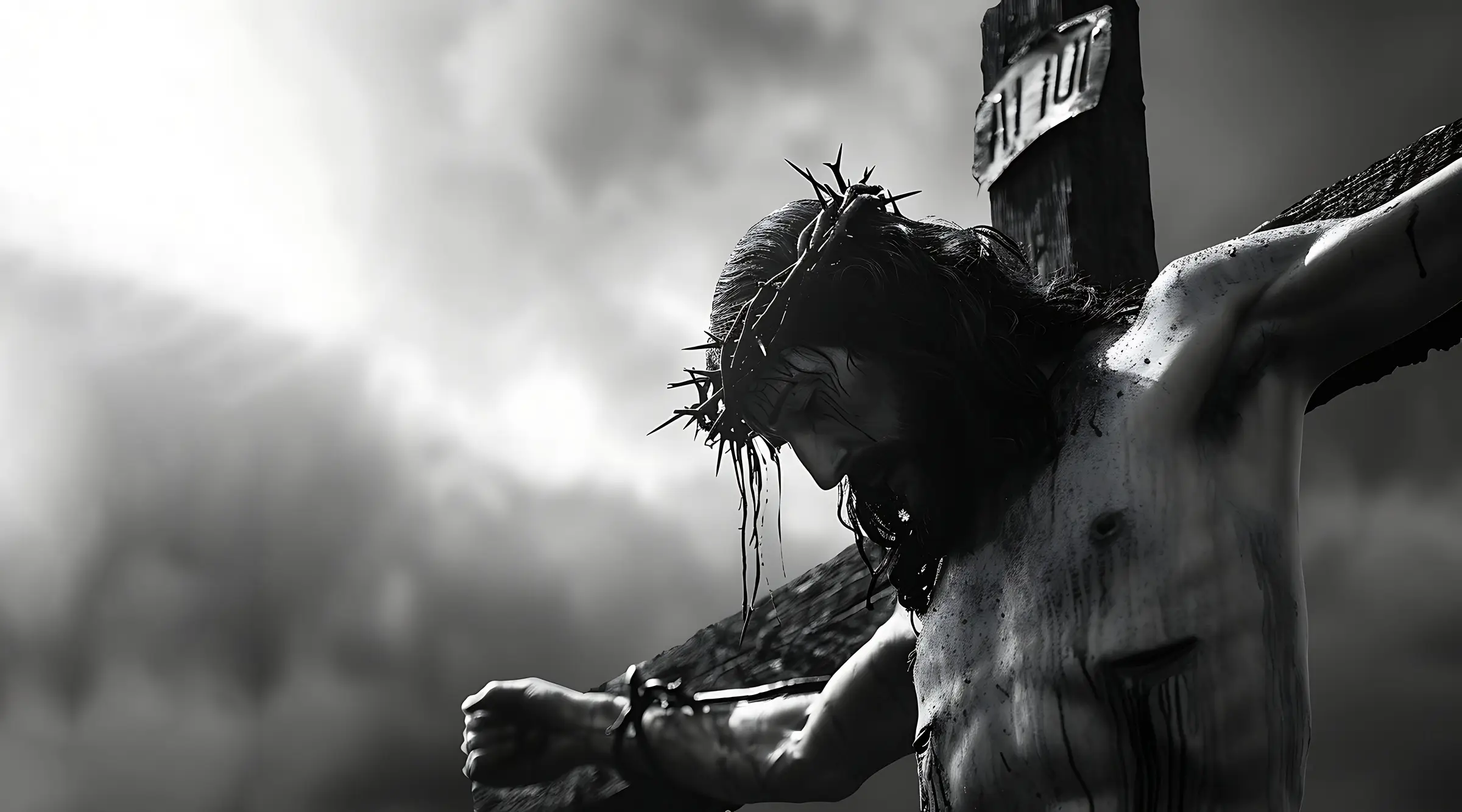
This question is one of the most frequently asked questions in the minds of those searching for the truth. How could the One who is said to be God weaken, suffer, and die? Isn’t God capable? Who was running the universe in those difficult hours?
First: Understand the depth of the “incarnation” again
Let us return to the secret of incarnation that we talked about in the previous episode. When we say that Christ is “fully God and fully man,” this means that his divine nature was not changed or transformed into humanity, but rather was united with human nature without mixing or separation.
Let’s take a simple example: If a king wore shabby clothes and sat among the poor, would he stop being king? If he suffered and was hungry with them, would the qualities of a king fall from him? Of course not. He was king all along, but he chose to share their pain.
Second: What exactly happened on the cross?
Christians do not believe that “God” died in the sense that He ceased to exist or that the Trinity collapsed. Rather, we believe that:
- The man Jesus died: His real body died and was buried. His soul separated from his body and ascended to the Father. Before his death, Jesus said: “Father, into your hands I commit my spirit” (Luke 23:46).
- Theology is not dead: The divine nature never dies. It is eternal and everlasting. But God the Son (the Second Person) experienced death in His human nature. This is what we call “the hypostatic union” – that is, the person of the Son is the one who suffered and died according to His humanity, and not according to His divinity.
Third: Who ruled the world?
The Father and the Holy Spirit did not die. The Trinity continues its work. The Son himself, according to his divinity, was continuing to preserve and manage the universe.
The Apostle Paul says about Christ: “Who, though he was in the form of God, did not consider equality with God to be robbery. But made Himself of no reputation, taking the form of a servant, and being made in the likeness of people” (Philippians 2:6-7).
The word “emptied Himself” does not mean that He ceased to be God, but rather it means that He put aside His divine glory and rights to experience the sufferings of mankind.
Fourth: Why all this?
The most important question: Why did God choose this difficult path?
The Bible offers one answer: love. “For God so loved the world that he gave his only Son, that whoever believes in him will not perish but have eternal life” (John 3:16).
Death is the result of sin (Romans 6:23). In order for God to free us from death, He had to enter the world of death and conquer it from within. As one of the early Christians said: “God became man so that man might become God” (meaning: to share in the divine nature).
Fifth: What happened after death?
This is the fun part! We believe that Christ did not remain dead. On the third day, he rose from the dead with his divine power. He said about himself: “I have power to lay it down, and I have power to take it up” (John 10:18).
His resurrection is the greatest evidence of his divinity. It is a declaration of victory over death itself. It is the good news that death does not have the last word.
Conclusion for thought
Imagine with me a king who abdicated his throne to free his people from cruel slavery. He entered the prison in their place, suffered in their place, then demolished the prison from the inside and emerged victorious. This is what the Gospel wants to say about Christ.
His death was not a defeat, but rather the greatest victory in history. The world in those hours was in the hands of the Father who never sleeps or neglects, the Holy Spirit who fills the universe, and the Son who, according to His divinity, continues to carry everything by the word of His power (Hebrews 1:3).